

Studying Abroad: Comparing Job Prospects in Singapore, Australia, and the UK
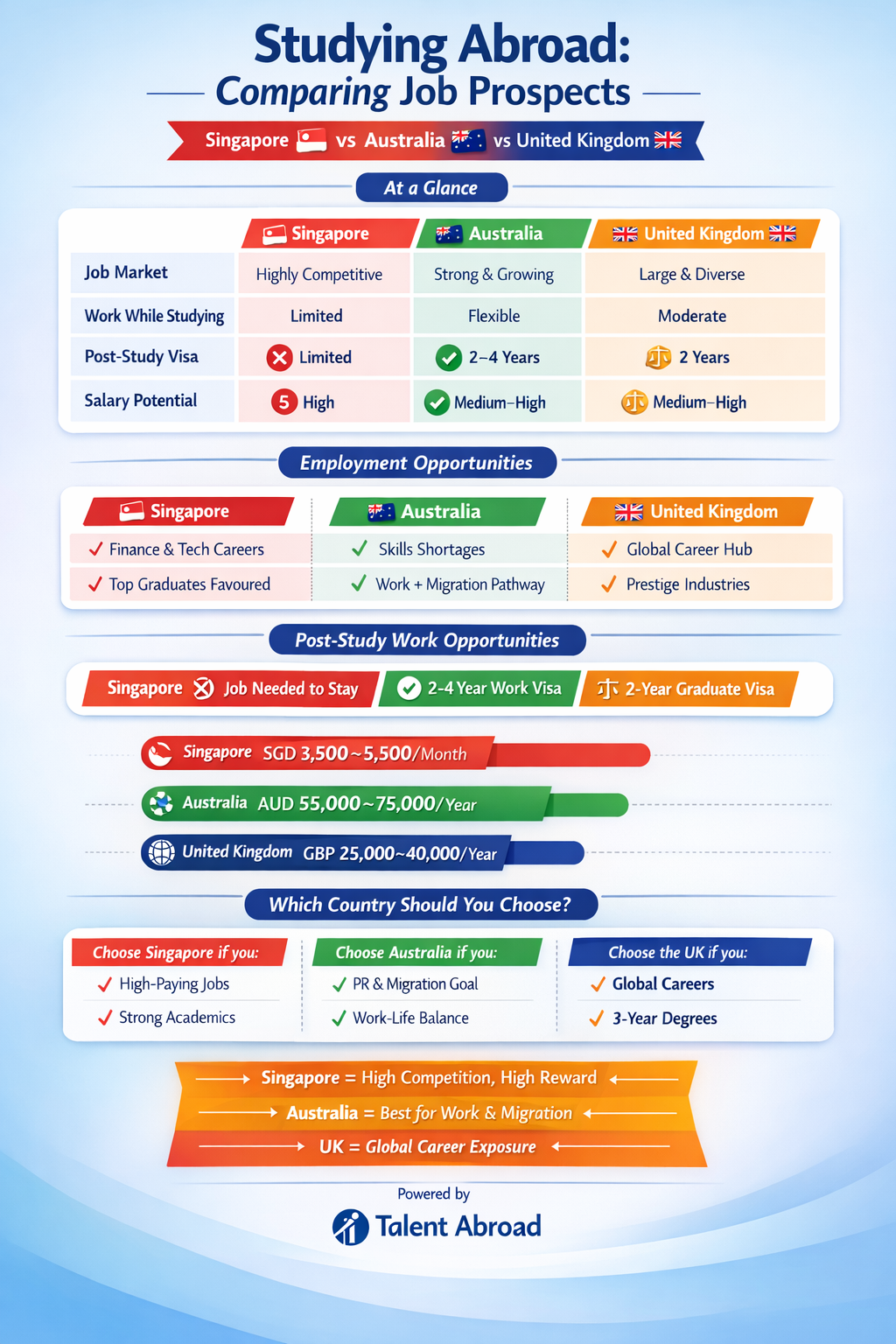
For many ASEAN students planning to study overseas, one of the most important considerations is employment prospects after graduation. While countries like Singapore, Australia, and the United Kingdom offer globally recognised universities, the job markets, salary levels, and opportunities for international graduates can differ significantly.
This article compares graduate employment outcomes, salary expectations, and career opportunities across these three popular study destinations.
1) Singapore: Strong Graduate Employment and Regional Career Hub
Singapore has one of the strongest graduate employment outcomes in Asia. According to the latest Joint Autonomous Universities Graduate Employment Survey:
92.2% of graduates entered the labour force within six months of graduation.
About 88.9% of those in the labour force secured employment within six months.
Median starting salary: about SGD 4,500 per month.
These outcomes reflect Singapore’s strong economy and demand for skilled graduates in sectors such as:
Technology and artificial intelligence
Finance and fintech
Engineering and advanced manufacturing
Biomedical sciences
Singapore’s position as a regional headquarters hub for multinational companies also means graduates often gain access to careers across Asia-Pacific.
Advantages
Strong graduate employment rates
Competitive starting salaries
Proximity for ASEAN students
High concentration of multinational companies
Challenges
Competitive job market
Work visa requirements for international graduates
2) Australia: High Post-Study Work Opportunities
Australia has long been popular with international students because of its post-study work visa options and relatively open labour market.
According to the Australian Graduate Outcomes Survey:
Around 52.3% of international graduates secured full-time employment shortly after graduation.
Overall employment rates for international graduates reached 66.5%.
Median salary among employed international graduates was around AUD 68,000 annually.
Australia also offers post-study work visas of 2–4 years, depending on the degree level, which gives graduates time to gain local work experience.
Advantages
Post-study work visa pathways
Large labour market
Opportunities across multiple cities
Challenges
Higher living costs in major cities
More competition from international graduates
Employment may depend on visa conditions
3) United Kingdom: Prestigious Degrees but Competitive Job Market
The United Kingdom remains a top destination for international students because of its historic universities and global reputation.
However, recent labour market reports indicate a more competitive environment for graduate employment.
Recent data suggests:
Around 88% of UK graduates are employed, though many face challenges entering professional roles.
Graduate job recruitment by top employers declined by about 24.5% between 2022 and 2025.
The median graduate starting salary is roughly £26,500–£35,000 per year depending on industry.
While the UK introduced a Graduate Route visa allowing two years of work after graduation, competition for professional roles remains intense.
Advantages
Globally prestigious universities
Large international job market
Strong sectors like finance and consulting
Challenges
Highly competitive graduate job market
Higher tuition fees and living costs
Salaries vary widely depending on degree
4) Comparing Employment Outcomes
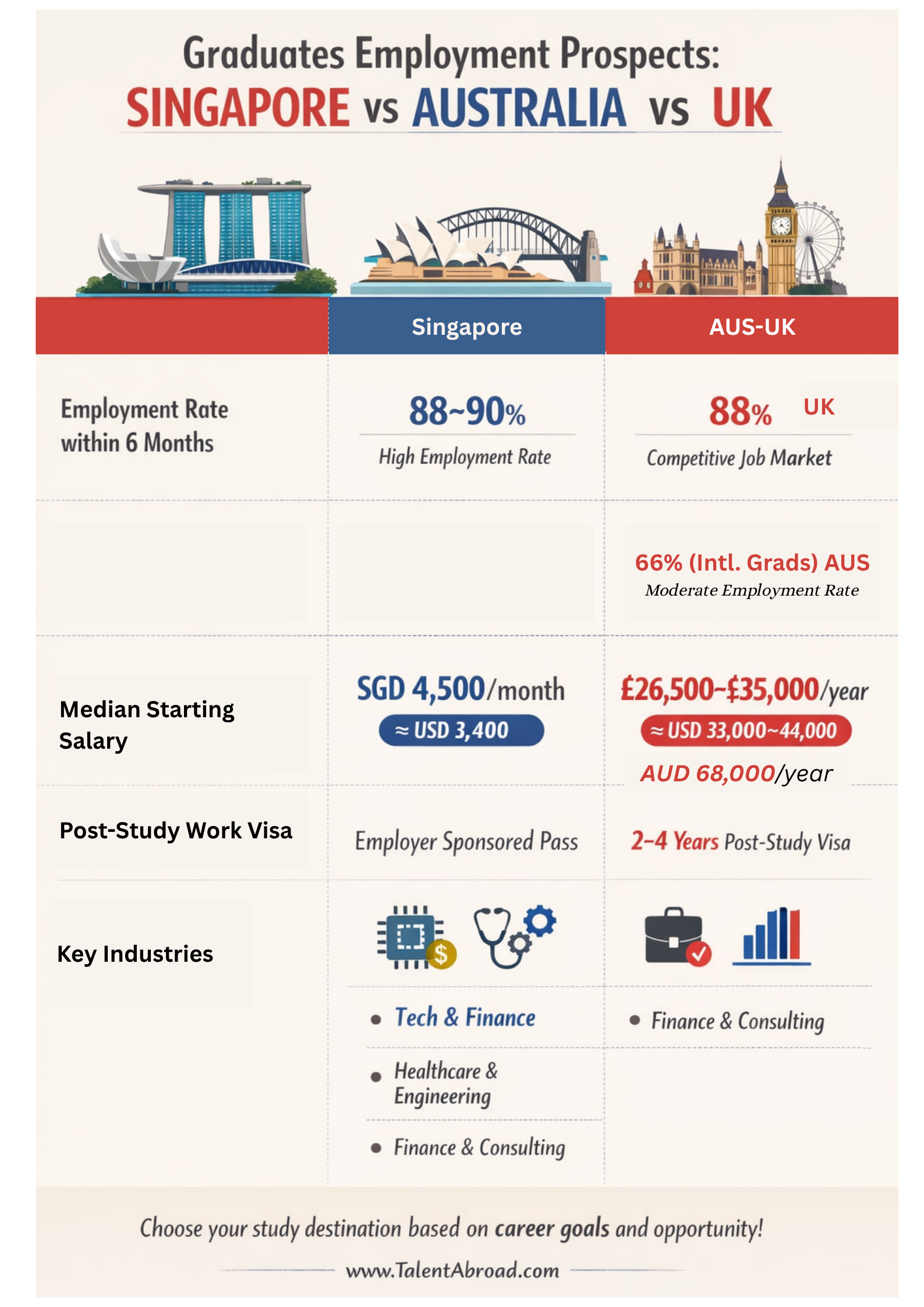
Which Destination Offers the Best Career Prospects?
The answer depends on a student’s goals.
Singapore
Best for students who want strong employment outcomes in Asia and access to multinational companies.
Australia
Best for students seeking longer post-study work visas and migration opportunities.
United Kingdom
Best for students seeking prestigious academic institutions and global career networks.
Final Thoughts
Choosing where to study should not be based on university rankings alone. Students should carefully consider:
Employment outcomes
Industry demand for their chosen degree
Visa policies for international graduates
Cost of living and tuition fees
For many ASEAN students, Singapore offers one of the strongest combinations of education quality, proximity, and career opportunities, but each destination offers unique advantages.
