

Can SPM Students Apply to Singapore Polytechnics? A Guide for Malaysian Students
For many Malaysian students, completing the Sijil Pelajaran Malaysia (SPM) is the first major academic milestone after secondary school. While most students traditionally progress to STPM, A-Levels, or foundation programmes, an increasingly popular pathway is applying directly to polytechnics in Singapore.
Singapore polytechnics offer industry-focused diplomas that combine academic learning with practical skills and strong employment prospects. For students who prefer applied learning and early career readiness, this pathway can be an attractive alternative.
The Sijil Pelajaran Malaysia (SPM) is Malaysia’s national secondary school examination, typically taken at the end of Form 5. It evaluates students across core subjects such as:
Bahasa Malaysia
English
Mathematics
Science
Additional elective subjects
SPM results are recognised by many institutions across the region, including several Singapore institutions for diploma-level admissions.
1) Can SPM Students Apply to Singapore Polytechnics?
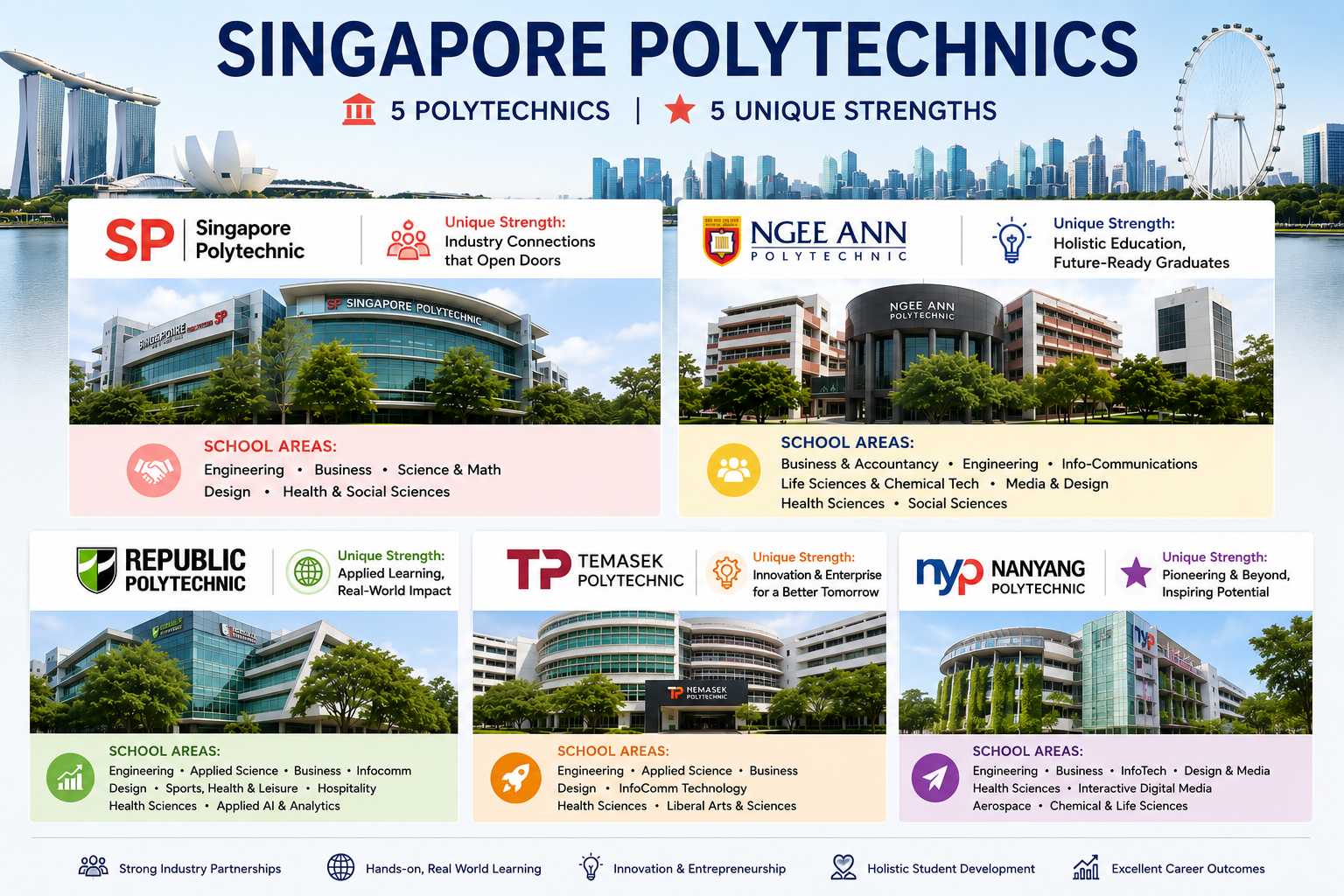
Yes. Many Malaysian students apply to Singapore’s leading polytechnics each year. Institutions such as:
Singapore Polytechnic
Ngee Ann Polytechnic
Temasek Polytechnic
Republic Polytechnic
Nanyang Polytechnic
accept international students, including those with SPM qualifications, for selected diploma programmes.
Admission is competitive, and applicants are typically assessed based on academic results, subject relevance, and overall academic performance.
Typical Entry Requirements
While requirements differ between polytechnics and courses, SPM applicants generally need:
Strong academic results
Good grades in Mathematics and English
Relevant science subjects for STEM programmes
Subject prerequisites
Some courses require specific subjects, such as:
Mathematics for engineering or IT
Biology or Chemistry for biomedical programmes
English proficiency
Since teaching is conducted in English, strong English results in SPM are important.
Popular Diploma Courses for Malaysian Students
Many Malaysian students choose polytechnic programmes aligned with high-demand industries, including:
Information Technology and Cybersecurity
Business and Digital Marketing
Engineering and Robotics
Biomedical Science
Media and Design
These diploma programmes typically take three years to complete and emphasise hands-on learning, internships, and industry projects.
2) Advantages of Studying in a Singapore Polytechnic
1. Practical, Industry-Oriented Education
Polytechnic education focuses on applied skills and real-world training rather than purely academic theory.
2. Internship Opportunities
Most diploma programmes include internships with industry partners, giving students valuable work experience before graduation.
3. Pathway to Universities
Strong-performing polytechnic graduates may progress to universities such as:
National University of Singapore
Nanyang Technological University
Singapore Management University
Some students also continue their studies in Australia, the UK, or other international universities.
3) Cost of Studying in Singapore Polytechnics
For international students, estimated annual costs include:
| Category | Estimated Annual Cost |
|---|---|
| Tuition Fees | SDG 12K-20K |
| Accomodation | SGD 8K-12K |
| Living Expenses | SGD 5K-8K |
Many students receive the Singapore government tuition grant, which significantly reduces tuition fees in exchange for a work commitment in Singapore after graduation.
Is the Polytechnic Pathway Right for You?
The polytechnic route is ideal for students who:
Prefer practical learning over academic theory
Want early industry exposure
Are interested in technology, business, or design fields
Plan to build careers in Singapore or international markets
Students who prefer more academic routes may instead consider A-Levels, foundation programmes, or STPM before university.
Final Thoughts
For Malaysian students with strong SPM results, Singapore polytechnics provide a valuable pathway to quality education, industry experience, and future university opportunities. With the right preparation and course selection, this route can lead to both strong career prospects and further academic advancement.
