

Chinese University Admissions for ASEAN Students: Opportunities, Requirements, and Career Prospects
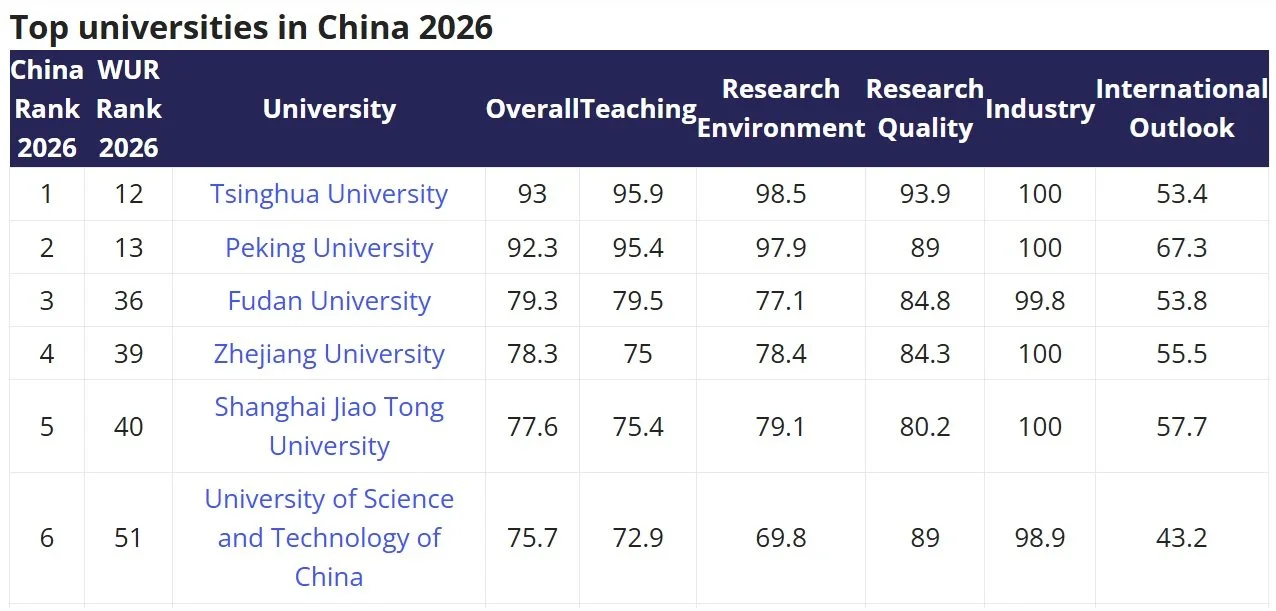
Extracted from Times Higher Education
China has become an increasingly popular destination for students from Southeast Asia seeking high-quality education, affordable tuition, and strong career prospects in Asia. With many universities ranked among the top globally and a growing number of programs taught in English, China is positioning itself as a major higher education hub for ASEAN students.
This guide explains how ASEAN students can apply to Chinese universities, admission requirements, scholarships, and key factors to consider.
1) Why ASEAN Students Are Choosing Chinese Universities
Over the past decade, China has significantly expanded its higher education sector. Universities have strengthened international partnerships and opened more programs to international students.
Several factors make China attractive:
1. Globally Ranked Universities
China has some of Asia’s leading institutions, including:
Tsinghua University
Peking University
Fudan University
Shanghai Jiao Tong University
These universities consistently rank among the top universities in Asia and the world.
2. Affordable Tuition Fees
Compared with Western universities, tuition fees in China are relatively affordable:
Undergraduate programs: USD 2,500 – USD 6,000 per year
Accommodation: USD 500 – USD 1,200 per year
3. Strong Technology and Engineering Ecosystem
China is a global leader in industries such as:
Artificial Intelligence
Renewable Energy
E-commerce
Manufacturing and robotics
Students studying in China gain exposure to one of the world’s most dynamic innovation ecosystems.
Popular Degrees for ASEAN Students
Many ASEAN students pursue degrees that align with China’s economic strengths.
Popular programs include:
Engineering and robotics
Computer science and artificial intelligence
International business and trade
Chinese language and culture
Medicine and pharmaceutical sciences
China is also becoming a leading destination for medical education, especially for students planning to practise in Asia.
2)Admission Requirements for ASEAN Students
The admission requirements vary by university but typically include:
Academic Qualifications
Students must have completed secondary school equivalent to:
A-Levels
STPM
International Baccalaureate
High school diploma equivalent
Language Requirements
For English-taught programs:
IELTS: 6.0 – 6.5
TOEFL: 80 – 90
For Chinese-taught programs:
Students must take the HSK (汉语水平考试, Hanyu Shuiping Kaoshi) Chinese proficiency exam.
Typical requirements:
HSK Level 4–5 for undergraduate programs
Many universities also offer one-year Chinese language foundation programs before degree studies.
3) Application Process
International students typically apply through one of two channels:
University international student admission portals
The Chinese government application platform known as China Scholarship Council
Typical application documents include:
Academic transcripts
Passport copy
Personal statement
Recommendation letters
Language test results
Application deadlines usually fall between March and June for September intake.
Scholarships Available
China offers generous scholarships to international students, including ASEAN students.
Major scholarships include:
Chinese Government Scholarship (CSC)
Full tuition coverage
Accommodation support
Monthly living allowance
Provincial Government Scholarships
Many Chinese provinces offer additional scholarships to attract international students.
University Scholarships
Leading universities such as Tsinghua University and Peking University also offer merit-based scholarships.
4) Career Opportunities After Graduation
Studying in China provides graduates with unique career advantages.
Many ASEAN graduates find opportunities in:
Multinational companies operating in China
ASEAN–China trade and logistics sectors
Technology firms and startups
Government and international organisations
With China being ASEAN’s largest trading partner, graduates with Chinese language skills and regional knowledge are increasingly valuable in the job market.
Challenges to Consider
Before choosing China as a study destination, students should consider:
Language and cultural differences
Internet restrictions and digital ecosystem differences
Recognition of certain professional degrees in their home country
Proper planning and choosing internationally recognised universities can mitigate these challenges.
Final Thoughts
China is rapidly becoming one of the most strategic education destinations for ASEAN students. With affordable tuition, strong universities, and expanding economic ties with Southeast Asia, studying in China can open doors to regional career opportunities.
For students interested in engineering, technology, international business, or Mandarin language skills, Chinese universities offer a compelling pathway to future success.
Considering studying in China?
A personalised university admissions strategy can significantly improve your chances of acceptance and scholarship success.
Talent Abroad provides guidance on:
Choosing the right Chinese universities
Scholarship applications
Admission preparation
Contact Talent Abroad to explore your study opportunities in China.
