

Is a Singapore Degree Worth It? Return on Investment (ROI) Based on the Latest Graduate Employment Survey
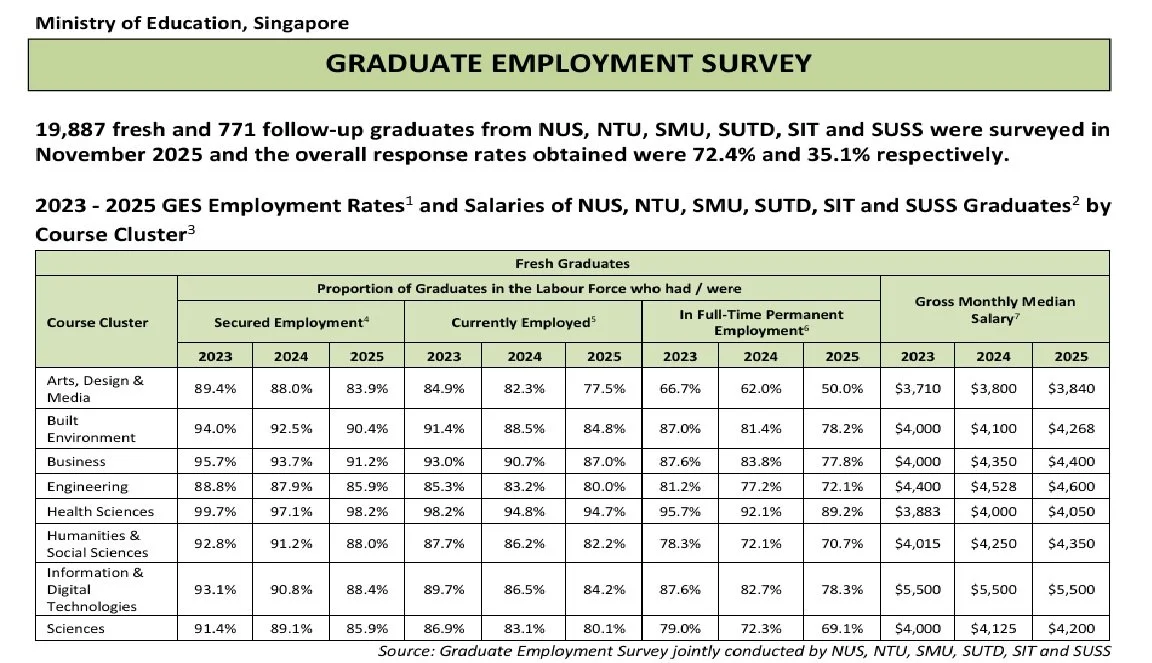
Tuition and living costs can be significant, so a key question arises: Does a Singapore university degree provide strong return on investment (ROI)?
Using the latest data from the Graduate Employment Survey (GES) conducted by Singapore’s autonomous universities, we can evaluate whether the cost of studying in Singapore translates into strong career outcomes.
1) Graduate Employment Outcomes in Singapore
The annual Graduate Employment Survey measures employment rates and starting salaries of graduates from major universities including the National University of Singapore, Nanyang Technological University, and Singapore Management University.
Key 2025 Survey Findings
88.9% of graduates secured employment within six months of finishing their final exams.
83.4% were employed overall within six months after graduation.
Median starting salary: about SGD 4,500 per month for full-time permanent employment.
For some universities, starting salaries are even higher. For example, graduates from National University of Singapore earned a median starting salary of around SGD 4,746 per month in 2025, reflecting continued demand for Singapore-trained graduates.
These figures demonstrate that Singapore graduates typically enter the workforce quickly with competitive salaries compared to many regional labour markets.
2) Estimating the Financial Return on Investment
Typical Cost of a Singapore Degree
International students generally spend approximately:
| Expense | Estimated Costs |
|---|---|
| Tuition Fees | SGD 17K-45K (depends on course) |
| Accomodation | SGD 6K-12K |
| Living Expenses | SGD 6K-10K |
| Total | SGD 120K-250K |
Early Career Earnings
With a median salary of SGD 4,500 per month, fresh graduates earn roughly: SGD 54,000 per year
Higher-paying fields such as computing, law, and finance can exceed SGD 6,000–7,000 monthly starting salaries.
At this level, many graduates can recoup their educational investment within 3–5 years of employment, especially if they remain in Singapore’s higher-paying labour market.
3) Which Degrees Deliver the Best ROI?
The Graduate Employment Survey consistently shows that course selection matters as much as university choice.
High ROI Fields
These degrees typically command the strongest starting salaries:
| Field | Median starting salary |
|---|---|
| Computer Science/ AI | SGD 6,000-6,400 |
| Law | SGD 7,000 |
| Business & Finance | SGD 5,000-6,000 |
| Engineering | SGD 4,500-5,800 |
Technology-related degrees dominate the top salary rankings due to strong demand for digital and engineering talent in Singapore’s economy.
Additional Factors That Improve ROI
1. Internships and Industry Exposure
Singapore universities emphasise industry internships and practical projects, which significantly improve employability.
2. Access to Regional Career Opportunities
Singapore serves as the regional headquarters for many multinational companies, offering graduates access to global career pathways.
3. Work Opportunities After Graduation
Graduates may remain in Singapore under employment passes, allowing them to benefit from higher salaries and international work experience.
4) Comparing Singapore with Other Study Destinations
| Factor | Singapore | UK/US |
|---|---|---|
| Degree duration | 3-4 years | 3-4 years |
| Starting salary | ~SGD 4,500 | Varies widely |
| Distance for ASEAN students | close to home country | far |
| Cost of living | high | often higher |
For ASEAN students, Singapore offers a balance of quality education, manageable travel distance, and strong career outcomes.
Final Thoughts
Based on the latest Graduate Employment Survey data, Singapore universities continue to demonstrate strong graduate employability and competitive starting salaries. While the upfront cost of studying in Singapore may be higher than some regional options, the combination of high employment rates, competitive salaries, and access to global companies can provide strong long-term return on investment.
For students planning their higher education pathway, the key is not just choosing the right university — but selecting the right course aligned with future industry demand.
