

Studying in a Singapore University as an Overseas Student: What You Need to Know
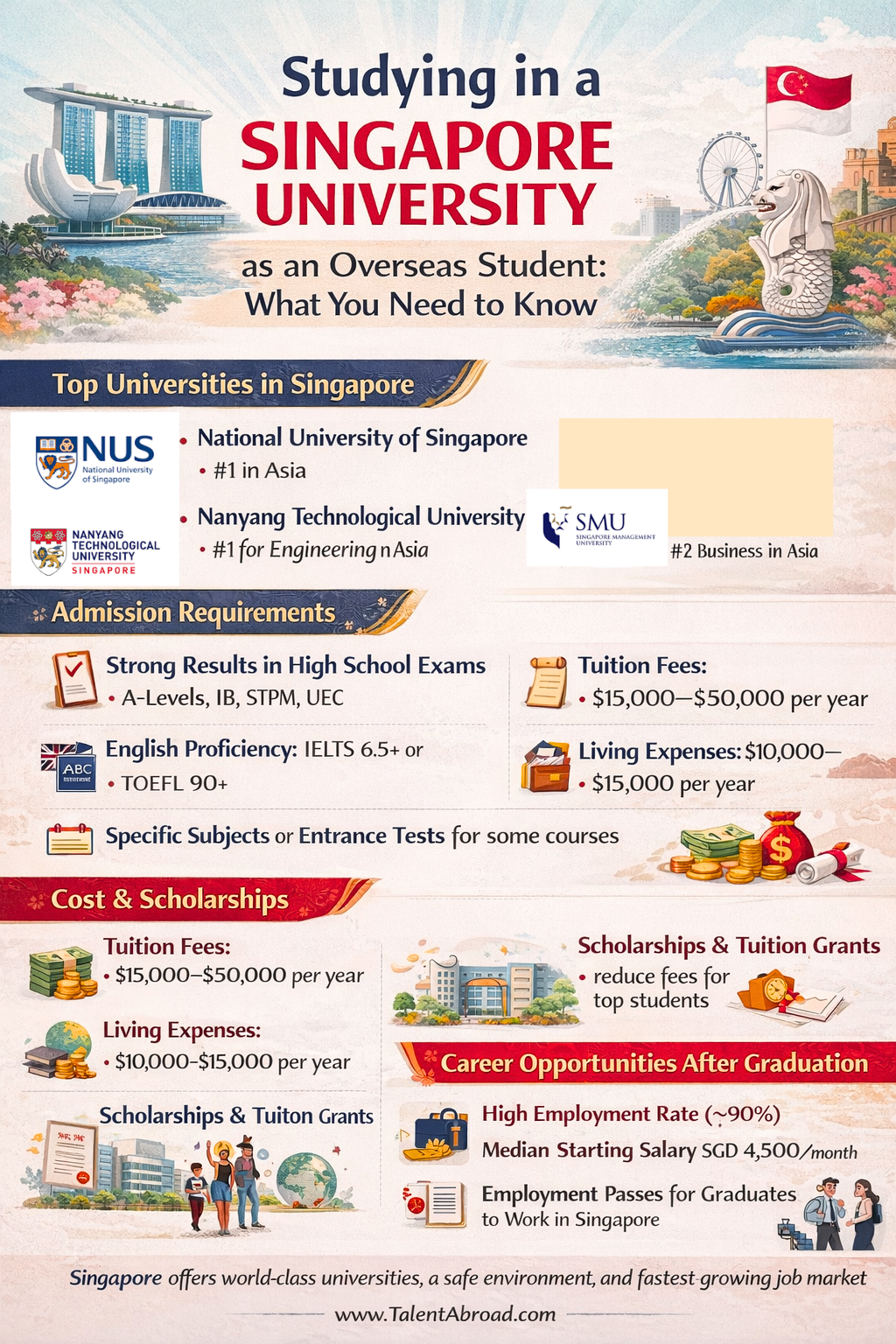
Singapore has established itself as one of Asia’s top destinations for higher education, consistently ranking among the world’s leading education hubs. For overseas students, studying in Singapore offers a rare combination of academic excellence, global recognition, and strong career outcomes — all within a safe, multicultural environment.
1) Why Choose Singapore for University?
World-Class Universities
Singapore is home to globally ranked institutions such as:
National University of Singapore (NUS)
Nanyang Technological University (NTU)
Singapore Management University (SMU)
These universities are renowned for their strong emphasis on research, industry relevance, and academic rigour. Degrees awarded are internationally recognised and highly regarded by employers worldwide.
Strong Graduate Employability
Singapore universities maintain close ties with multinational companies across technology, finance, engineering, and life sciences. Many degree programmes incorporate:
Industry projects
Internships
Applied research opportunities
This gives overseas students a significant advantage when seeking internships and early-career roles, both in Singapore and internationally.
A Safe, Multicultural Environment
Singapore is consistently ranked as one of the safest countries in the world. English is the primary language of instruction, making it accessible for international students, while its multicultural society helps overseas students adapt quickly and feel at home.
Entry Requirements for Overseas Students
Admission requirements vary by university and programme, but generally include:
Academic qualifications (A-Levels, IB, STPM, foundation programmes, or equivalent)
English proficiency (IELTS / TOEFL, if applicable)
Strong academic results, particularly in relevant subjects
Personal statements and interviews (for selected courses)
Highly competitive programmes such as Medicine, Law, and Computer Science have particularly stringent entry standards.
2) Cost of Studying in Singapore
Tuition Fees
Overseas students can expect annual tuition fees ranging from:
SGD 25,000 – 60,000, depending on the programme and institution
Many students benefit from the Singapore Government Tuition Grant, which significantly reduces fees in exchange for a post-graduation work commitment in Singapore.
Living Expenses
Estimated living costs:
SGD 800 – 1,500 per month
Includes accommodation, food, transport, and basic personal expenses.
Scholarships and Financial Support
Singapore universities offer a wide range of scholarships for outstanding overseas students, including:
University merit scholarships
Government-linked scholarships
Industry-sponsored awards
These are highly competitive and typically require strong academic results, leadership qualities, and extracurricular achievements.
3) Student Visa & Post-Study Opportunities
Overseas students require a Student’s Pass, which is usually facilitated by the university upon acceptance.
After graduation, students may apply for:
Long-Term Visit Pass
Employment Pass / S Pass
Singapore’s strong job market and structured work visa pathways make it an attractive option for students seeking early-career opportunities in Asia.
Challenges to Consider
While Singapore offers many advantages, students should be prepared for:
Highly competitive academic environments
Intensive coursework
High expectations for independent learning
Proper academic planning and realistic course selection are essential to long-term success.
How Talent Abroad Can Help
At Talent Abroad, we guide overseas students through every stage of the Singapore university journey:
Academic pathway planning
University and course selection
Application strategy and timelines
Scholarship and tuition grant guidance
Career-oriented degree planning
Our goal is not just university admission — but positioning students for long-term academic and career success.
Ready to Study in Singapore?
Take the first step towards a world-class education and a global career.
Contact Talent Abroad today for personalised university admissions advice.
