

Is Mandarin Required to Study in China? What Malaysian Parents Actually Need to Know

Picture two Malaysian students on the same English-taught program at the same Chinese university, neither speaking Mandarin on day one. Four years later, one earns a Kuala Lumpur job offer worth nearly double the other's. Same degree. Different outcome.
Mandarin is not required to study in China. Most English-taught programs ask for IELTS or TOEFL, not HSK. The harder question, the one this article answers, is what a family gives up by treating "no Mandarin needed" as the end of the decision, not the start of it.
Key Takeaways
Admission requirement: HSK is not required for English-taught degree programs in China. IELTS (6.0–6.5) or TOEFL (80–90) is the actual gatekeeper; HSK only becomes mandatory for Chinese-taught programs.
The Malaysia salary gap: Bilingual Mandarin-English roles in Malaysia are currently advertised at RM3,800 to RM5,900 a month, against a national median monthly wage of RM3,027 (DOSM, March 2026).
Demand signal: JobStreet Malaysia currently lists over 8,600 active Mandarin job postings, a present-day figure families can verify themselves.
Why this isn't a trend: China has been Malaysia's largest trading partner for 17 consecutive years, with 2025 bilateral trade at RM542.2 billion, up 12% year-on-year. The new ASEAN-China Free Trade Area 3.0 upgrade (October 2025) will deepen that further.
Decision rule: If your child is admission-ready in English, the real decision left isn't whether China is viable. It's whether to add structured HSK coaching alongside the degree.
Do You Need to Speak Mandarin to Study in China?

No, you don't need to speak Mandarin to study in China. Most Chinese universities now offer English-taught programs with IELTS or TOEFL as the entry requirement, not HSK (the Hanyu Shuiping Kaoshi, 汉语水平考试, China's standardized Chinese-proficiency test).
Exploring study in China as an option, this is usually the first fear families clear. Picturing a child struggling to make friends or falling behind in an unfamiliar language is reasonable, but it doesn't match the route most Malaysian and Singaporean applicants take.
Mandarin becomes relevant after admission, not before it, and that timing is exactly where families make the wrong call.
Ready to explore your options?
Book a Complimentary Consultation with an Asia education specialist.
Contact Talent Abroad now
Why "My Child Doesn't Speak Mandarin" Feels Like a Dealbreaker
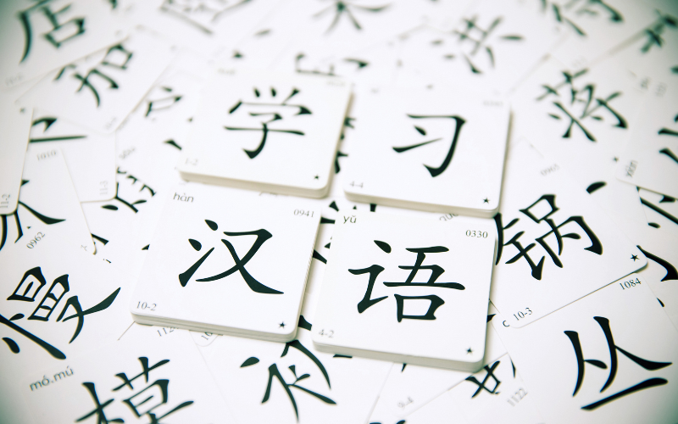
The Mandarin objection isn't really about admission requirements. It's about picturing your child isolated in lectures, unable to make friends, or struggling to order food. That fear is reasonable. It's also solvable in a way most families never get shown.
You're not overthinking this. English-taught programs exist, but campus life, dorms, and casual socializing still run partly in Mandarin, a point UniApply's own guidance on studying in China makes too, so the concern isn't imaginary.
The Mandarin question carries disproportionate weight because it's unfamiliar, not because it's a bigger risk than any other overseas move.
Is IELTS or HSK the Real Admission Requirement for Chinese Universities?
HSK is not required for English-taught degree programs in China. What is required is IELTS (typically 6.0 to 6.5) or TOEFL (typically 80 to 90), depending on the university. HSK only becomes mandatory if your child chooses a Chinese-taught program, which most Malaysian applicants don't.
For English-taught programs in China, most Double First-Class universities set the same bar. Fudan University, Jiangnan University, and Shanghai Normal University, for example, all run English-taught tracks under this model.
HSK becomes mandatory only on the Chinese-taught route, where most Science and Engineering degrees require HSK 4, and Liberal Arts, Law, or Traditional Chinese Medicine typically require HSK 5 or 6.
English-taught programs are also more limited in scope. As China Uni Study's English-taught programs guide notes, they're typically confined to business, engineering, and medicine at most universities, not the full course catalog. That's exactly why "can I" and "should I" turn out to be two different questions.
Students without HSK readiness can still take the Chinese-taught route: a foundation or bridging year gets them to HSK 4 before the degree begins.
| Chinese-taught programs | English-taught programs | |
|---|---|---|
| Language requirement | HSK Level 5 or 6 | IELTS 6.0 to 6.5, or TOEFL 80 to 90 |
| Programme availability | Full range of courses | Limited to business, engineering, and medicine at most universities |
| Career positioning | Stronger for China-based or China-facing careers | Suited for regional or multinational career paths |
Qualification-wise, A-Level, STPM, and IB are widely accepted, and UEC is accepted by many Chinese universities, with some waiving HSK for UEC holders. SPM and O-Level holders typically need a foundation or bridging year before degree entry.
Our university application advisory covers which qualification opens which door.
The Double First-Class tier that most Malaysian and Singaporean applicants target includes Tsinghua University (14th globally, QS 2027), Peking University (13th globally, QS 2027), Fudan University, Shanghai Jiao Tong University, Zhejiang University, and Wuhan University.
Each with a different strength: Tsinghua and Shanghai Jiao Tong lead in engineering, Peking in sciences and law, Fudan in business and international relations.
Choosing the English-taught route to avoid Mandarin doesn't just simplify admission. It also caps what the degree is worth once your child comes home.
How Much Is Mandarin Fluency Worth in Malaysia's Job Market?
Mandarin-speaking professionals in Malaysia are currently earning RM3,800 to RM5,900 a month in advertised roles, against a national median monthly wage of RM3,027. That's today's job market, and the gap exists whether or not your child sets foot in China.
This range comes from JobStreet listings for bilingual Mandarin-English roles, measured against DOSM's national median for March 2026, as reported by SAYS. Even at RM3,800, the gap is real; at RM5,900, it's substantial.
This is the tradeoff from the previous section made concrete: the English-taught, HSK-free route qualifies a graduate for "regional or multinational" roles, but not necessarily these higher-paying bilingual ones.
JobStreet Malaysia lists over 8,600 active Mandarin job postings, verifiable in minutes. The premium shows on the China side too: over 86% of Tsinghua University graduates enter key industries like technology, energy, engineering, and finance, real placement outcomes, not just prestige.
Remember the two students from the introduction: same degree, same starting point. The gap isn't the classroom. It's what one of them built alongside it.
A Chinese degree gets your child into the classroom. Mandarin fluency gets them into the job market that's already paying for the skill.
| Monthly Wage (RM) | |
|---|---|
| Malaysia national median (DOSM, March 2026) | 3,027 |
| Typical advertised bilingual Mandarin roles | 3,800 to 5,900 |
Why Is Demand for Mandarin-English Professionals Growing in Malaysia?

China has been Malaysia's largest trading partner for 17 consecutive years, with full-year 2025 bilateral trade reaching RM542.2 billion, up 12% year-on-year.
That trade figure comes from DOSM's 2025 external trade release, as reported by BusinessToday. The ASEAN-China Free Trade Area 3.0 Upgrade Protocol, signed on 28 October 2025, expands cooperation into nine areas, including the digital economy and supply chain connectivity, a concrete, dated policy event rather than a vague trend.
HSBC's research on the ASEAN-China corridor adds another layer: 65% of China-based firms surveyed had plans for inorganic growth in ASEAN, and Malaysia was the number one target, with more than a quarter of Chinese firms without a Malaysian presence planning to expand there. Each of those firms will need Malaysia-based staff fluent in English and Mandarin.
The admission barrier is smaller than it looks. The upside is bigger than most families realise. The only question left is how to get both.
How to Get Both: The Degree and the Advantage

The choice isn't English-taught versus Chinese-taught. It's whether your child builds Mandarin alongside whichever route they choose. A structured HSK pathway, planned early, means the degree and the language premium arrive together.
Talent Abroad's HSK program runs as a progression from HSK 3 to 6 with a diagnostic assessment upfront, not an all-or-nothing requirement. A beginner typically reaches HSK 4 in 6 to 12 months; a student already at HSK 3 reaches HSK 5 in 4 to 8 months, timelines that fit inside the Pre-University Planning window of 18 to 24 months before application.
HSK sits within the wider Language Proficiency pillar, which also covers IELTS and TOEFL for families choosing the English-taught route. Our Pre-University Planning service is where the language route planning for China typically starts.
Chinese universities generally follow the same cycle: applications December to January, deadlines March to May, results and the JW visa June to August, intake in September. HSK or IELTS/TOEFL prep needs to sit inside that window, not compete with it.
Why Talent Abroad
Talent Abroad is an Asia-Specialist education mentorship consultancy, not a general placement agent, built specifically around China and Singapore as core destinations rather than the usual UK/US/AU default.
Our China advisory also covers Hong Kong (HKU, CUHK, HKUST) for families weighing it alongside the mainland.
Direct, current knowledge of Double First-Class university admission mechanics, not recycled agency copy
Structured HSK 3-to-6 progression delivered through the Language Proficiency pillar, alongside IELTS and TOEFL coaching
Assesses CSC and university scholarship eligibility upfront; the CSC scholarship alone covers full tuition, accommodation, and a monthly allowance of CNY 2,500 to 3,500, but competition is real, and not every applicant qualifies
Advises across all four pillars: Pre-University Planning, Language Proficiency, University Application, and Post-Admission Services, so language planning isn't bolted on afterward
Every consultation starts with an honest profile assessment before any recommendation is made
Conclusion
Mandarin is not required to study in China. Most English-taught programs ask for IELTS or TOEFL, not HSK. The bigger decision is what happens after graduation: bilingual Mandarin-English professionals in Malaysia earn RM3,800 to RM5,900 a month against a national median of RM3,027, backed by 8,600+ JobStreet listings and 17 years of China as Malaysia's top trading partner.
If your child is admission-ready in English, the real decision isn't whether China is viable. It's whether to build the language advantage alongside the degree.
Want to learn more about studying in Singapore?
Our 45-minute consultation walks you through exactly what to expect.
Contact Talent Abroad now
Frequently Asked Questions
-
Yes. Most Chinese universities offer English-taught programs at undergraduate and postgraduate levels, requiring IELTS or TOEFL rather than HSK. Availability is typically limited to business, engineering, and medicine.
-
Only for Chinese-taught programs. English-taught programs require IELTS (6.0 to 6.5) or TOEFL (80 to 90) instead. HSK becomes relevant later for students wanting the full course range or a stronger China-facing career.
-
Not for the degree itself, but for the career premium attached to it. Malaysia's own job market currently pays more for bilingual Mandarin-English professionals, independent of where the degree was earned.
-
For most families, yes. China remains Malaysia's largest trading partner, and Chinese firms are actively expanding into Malaysia under the new CAFTA 3.0 agreement, increasing demand for Mandarin-literate professionals based in Malaysia.
-
Yes. Talent Abroad's HSK program runs as a structured HSK 3-to-6 progression, planned into the same 18-to-24-month window as Pre-University Planning, so language coaching and applications move together.
