

Is a Singapore Degree Worth It for Malaysian Students?

For many in Malaysia, a Western education has long been the safer, more prestigious choice, usually the UK first, with the USA and Australia as familiar alternatives.
That preference made sense for years. British-linked pathways like A-Levels and STPM, plus twinning options, made the UK the natural overseas route, with a Russell Group university often the benchmark.
But the equation is changing. Rising costs, tighter visa rules, and shifting career realities are pushing families to reassess whether a UK degree still offers the best return, part of a wider Singapore vs UK university debate reflected in this recent CNA commentary.
Singapore now gets serious consideration. For families weighing whether a Singapore degree is worth it for a Malaysian, the real question is whether NUS or NTU can outperform the UK in terms of cost and career value. Talent Abroad uses the same lens when comparing best-fit options.
Direct answer: for most families today, yes. A Singapore degree is worth it for Malaysian students, especially compared to the UK in terms of cost, employability, and Southeast Asia career fit.
Key Takeaways
Singapore is a credible alternative to the UK for Malaysian students, with the USA and Australia no longer the automatic benchmarks.
NUS and NTU stand out for global prestige, employer recognition, and access to Singapore’s regional business network.
Singapore’s SGD 4,500/month graduate median is useful for comparison, but it does not guarantee the same salary outcome for graduates returning to Malaysia.
For Malaysians, the stronger value of a Singapore degree is regional career mobility across Singapore, Malaysia, and Southeast Asia.
Singapore is often the first work destination due to the Tuition Grant bond, while Malaysia remains a credible later-return or regional career option.
Top Universities in Singapore
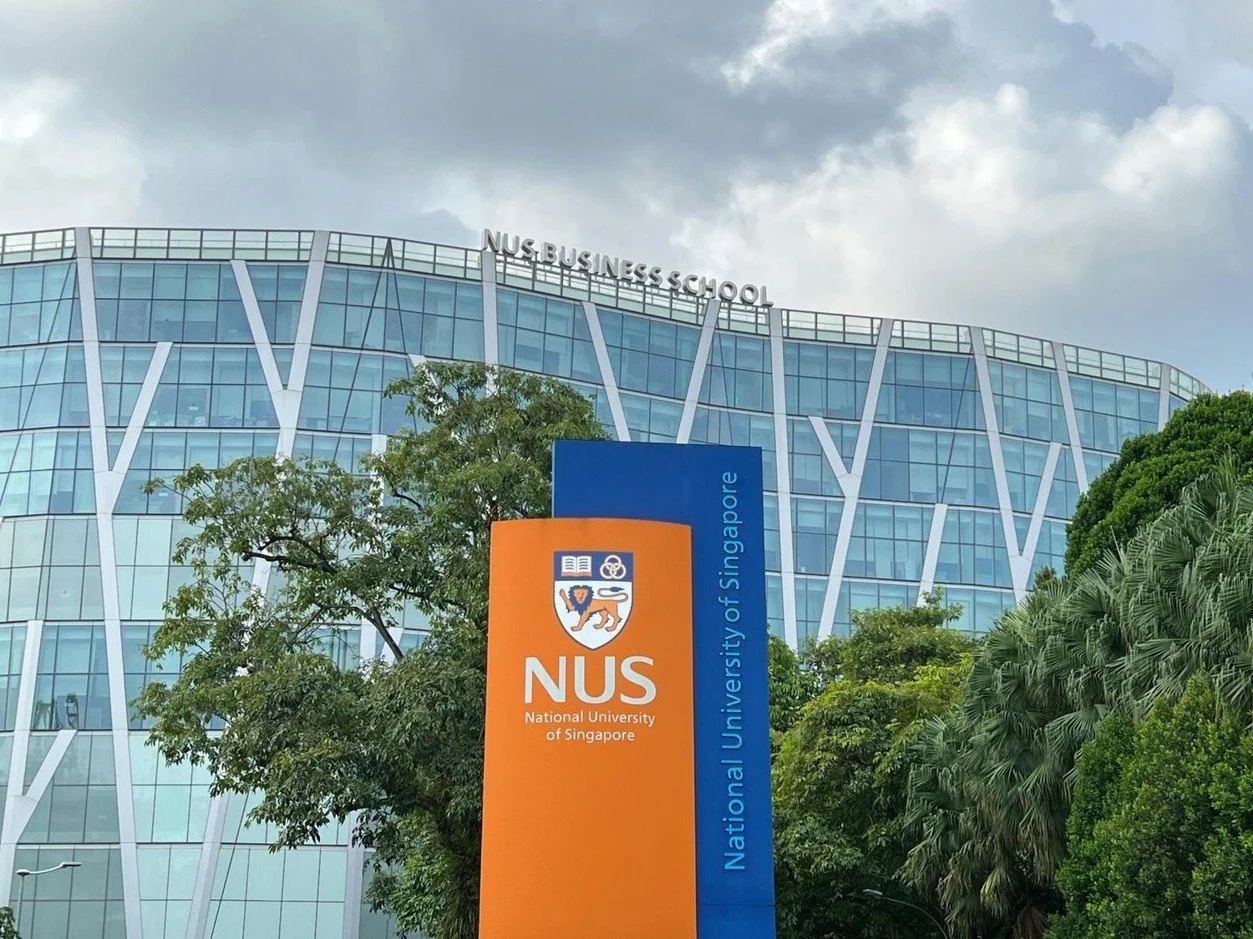
Singapore has six autonomous universities, each prestigious in its own right:
National University of Singapore (NUS)
Nanyang Technological University (NTU)
Singapore Management University (SMU)
Singapore University of Technology and Design (SUTD)
Singapore Institute of Technology (SIT)
Singapore University of Social Sciences (SUSS)
Against the UK as the traditional benchmark, NUS and NTU are the most relevant proof points because of their global rankings and strong employer recognition.
NUS ranks 10th and NTU 12th globally in the QS World University Rankings 2027, released June 2026, both ahead of all but a small number of UK Russell Group universities. This is where most of the NUS degree value for Malaysia-based families actually sits.
SMU, SUTD, SIT, and SUSS add stronger subject-specific pathways across business, design, applied technology, and social sciences.
Is an NUS or NTU Degree Recognised in Malaysia and Southeast Asia?
Yes. NUS, NTU, and Singapore’s other autonomous universities are well recognised across Singapore, Malaysia, and much of Southeast Asia, especially in private-sector, multinational, and employer-led environments where institutional reputation, work experience, and skill set drive hiring decisions.
For Malaysian students, this recognition should be viewed regionally, not only as a backup plan for returning to Malaysia. Many graduates may start their careers in Singapore, while Malaysia remains a credible medium- or long-term option for family reasons, business opportunities, relocation, or ASEAN-facing roles.
In Malaysia, an NUS or NTU degree remains a strong credential for corporate roles, multinational employers, technology, finance, consulting, healthcare, manufacturing, education, and regional management pathways.
However, formal checks may involve bodies such as the Malaysian Public Service Department or Jabatan Perkhidmatan Awam (JPA) for public sector roles, professional boards for regulated fields, or the Malaysian Qualifications Agency (MQA) for qualification recognition.
Formal verification becomes more important if you plan to:
Apply for Malaysian civil service or public sector positions, where JPA requirements may apply
Join professional bodies in engineering, medicine, architecture, or other regulated fields
Register with the Legal Profession Qualifying Board (LPQB) to practise law
Pursue postgraduate studies at a Malaysian public university, where MQA recognition may apply
The same principle applies outside Malaysia. For regulated professions, students should check recognition based on the country, profession, and intended career pathway.
How Much Does a Singapore Degree Cost for Malaysian Students?
A Singapore degree can cost significantly less with the MOE Tuition Grant than many Malaysians expect, especially when compared with typical UK degree costs.
The UK remains the clearest benchmark because of its long-standing role in Malaysian overseas study decisions, while the USA and Australia stay relevant in the wider comparison.
Estimated Cost of a Singapore Degree for Malaysian Students
| Course Component | With MOE Tuition Grant | Without Grant |
|---|---|---|
| Tuition(per year)* | SGD 14,000–30,000 (~RM 44,100–94,500) | SGD 33,000–47,000(~RM 103,950–148,050) |
| Living Expenses (per year)* | SGD 10,000–18,000 (~RM 31,500–56,700) | SGD 10,000–18,000 (~RM 31,500–56,700) |
| Estimated Total (4-year degree)* | SGD 96,000–192,000 (~RM 302,000–605,000) | SGD 172,000–260,000 (~RM 542,000–819,000) |
*Currency exchange is correct as of the time of publishing
The MOE Tuition Grant Scheme offsets around 40% to 60% of international tuition fees in exchange for a three-year post-graduation work commitment with a Singapore-registered entity.
For many applicants, the grant does more than lower the upfront cost. It also creates a clearer legal pathway into the local job market after graduation.
Baseline costs for equivalent Western degrees often trend higher, though none of the three publishes one standardised total-cost figure the way Singapore's MOE data does.
Contributing factors include higher currency exchange (GBP, USD, AUD all convert to more ringgit than SGD), mandatory fees like the UK's Immigration Health Surcharge (£776 (RM4,230)/year for students), and higher costs of living in cities like London or Sydney.
Scholarships or twinning programmes can lower this for some students, though they're the exception rather than the norm.
Do Singapore Graduates Earn More Than UK Graduates?

Singapore graduate salaries are competitive with UK graduate salaries, and Singapore's published outcomes are measured earlier, at six months rather than fifteen months.
These figures compare graduate outcomes in Singapore and the UK, so they should be treated as benchmarks rather than a direct indicator of Malaysia-based salary outcomes.
Graduate Salary and Employment Snapshot: Singapore vs UK
| Institution / System | Median Starting Salary | Employment Rate | Tracking Window |
|---|---|---|---|
| Singapore Universities (All Six, Overall Average) | SGD 4,500/month (~RM 14,170) | 88.9% | 6 months post-exams |
| UK Universities (All Graduates) | £30,000/year (~RM 13,600/month) | 87% in work or study | 15 months post-graduation |
*Singapore data is based on the Joint Autonomous Universities Graduate Employment Survey 2025, covering all six autonomous universities. While UK data is based on the HESA Graduate Outcomes survey.
Singapore's figures are already competitive on a shorter measurement window. Give the UK figure the same six-month runway Singapore uses, and the gap would likely be wider.
The £30,000 figure is also the blended UK number, not international-student-specific. International graduates in the UK tend to earn less than domestic graduates on average.
What about graduates who return to Malaysia or build careers across Southeast Asia? No dedicated public survey tracks Malaysian Singapore university graduates who return to Malaysia, so the value is better framed as regional career mobility, not guaranteed salary uplift.
A Singapore degree does not automatically translate into Singapore-level pay in Malaysia. Recent reporting on Singapore-Malaysia cross-border careers suggests that such moves are often linked to MNCs, specialised roles, leadership tracks, regional management, relocation, secondment, or business opportunities.
For Malaysians, Singapore degrees, especially from NUS and NTU, can still offer strong value when paired with Singapore-based work exposure.
The degree can support access to ASEAN-facing roles, regional networks, multinational employers, and cross-border career pathways, whether the graduate stays in Singapore, returns to Malaysia later, or works across the region.
Does Course Choice Matter More Than University Brand?
A common assumption is that NUS or NTU pays well regardless of course. In Singapore, salary outcomes vary more by course than many applicants assume, especially across computing, engineering, medicine, and business-related pathways.
High-performing tech, computing, and niche business-related programmes can clear SGD 6,000 to 6,950 per month (~RM 18,900 to RM 21,900), while other foundational degrees sit much closer to the national median.
Selected High-Performing Courses Across Singapore's Autonomous Universities
| Course / Specialisation | University | Median Starting Salary | Mean Starting Salary |
|---|---|---|---|
| Double Degree (Business & Computer Engineering) | NTU | SGD 6,950/month (~RM 21,900) | SGD 7,166/month (~RM 22,600) |
| Bachelor of Medicine and Bachelor of Surgery | NUS | SGD 6,500/month (~RM 20,480) | SGD 6,344/month (~RM 20,000) |
| Computer Science (Cum Laude and above) | SMU | SGD 6,250/month (~RM 19,690) | SGD 6,585/month (~RM 20,740) |
| Computer Science and Design | SUTD | SGD 5,000/month (~RM 15,750) | SGD 5,228/month (~RM 16,470) |
| Computer Science (Real-Time Interactive Simulation) | SIT | SGD 5,000/month (~RM 15,750) | SGD 5,231/month (~RM 16,480) |
*Currency exchange matches the time of publishing. Data is based on the official 2025 Joint Autonomous Universities Graduate Employment Survey.
The monthly spread between the highest- and lowest-paying courses here is roughly SGD 2,500 (~RM 7,900), wider than the gap between Singapore's overall median and the UK's blended graduate median. Course selection is frequently the deciding factor over university brand.
The same logic applies one level up, at the university level:
SMU has a strong profile in business, management, law, and computing.
SUTD and SIT lean more heavily into applied technology, design, and industry-linked engineering.
SUSS is better known for flexible pathways, social sciences, and adult or mid-career education.
Fit is the real lever at both the course and university level.
Need help choosing the right Singapore university and course? Talent Abroad's University Application support helps compare universities, shortlist programmes, and build a stronger application strategy.
Is the UK or Singapore Better for Post-Study Work Pathways?

For many Malaysians, Singapore offers a clearer study-to-work pathway, while the UK's post-study route has become more restrictive. Whether to study in Singapore or the UK often comes down to this pathway more than salary alone.
For those seeking work experience abroad, the UK's post-study pathway has become harder to navigate:
● The Skilled Worker route now requires a salary threshold of £41,700/year (~RM 227,000), or £33,400 (~RM 182,000) at the discounted new-entrant rate, both above the UK's own median graduate salary.
● The Graduate Route will shorten to 18 months for applications made from 1 January 2027, down from 2 years.
None of this means a UK degree has no value. It means the "safe default" assumption skips a post-graduation pathway that's become considerably harder to secure since 2025.
Singapore's setup is more straightforward at the study stage. Malaysians accepted into full-time study generally need a Student's Pass rather than a separate study visa.
For Tuition Grant recipients, the transition from graduation to work is also more directly tied to the local job market, effectively a job commitment already in hand.
Choosing Between NUS/NTU and a UK Russell Group University
For families weighing NUS vs UK Russell Group options, the practical answer usually comes down to where the career will actually be built.
Choose Singapore if:
● Your child is open to starting their career in Singapore
● Your child’s longer-term career will be built in or around Southeast Asia
● Cost, employment outcomes, and post-graduation clarity matter most to your family
● You do not already have a secured UK sponsorship pathway in hand
Consider the UK only if:
● Your child has a specific, credible UK pathway already, such as a STEM PhD, a shortage occupation, family sponsorship, or a graduate scheme offer in hand
Proximity and Cultural Familiarity: The Practical Realities
Singapore also has a practical advantage for Malaysian students: distance and day-to-day familiarity.
Its proximity makes family visits, emergency travel, and everyday logistics easier than studying in the UK, USA, or Australia. Shared languages, familiar food, and a more regionally recognisable environment can also reduce adjustment pressure during the first year.
The business network is another advantage. Singapore serves as the regional headquarters for over 4,700 multinational companies operating across Southeast Asia, according to Singapore’s Economic Development Board.
This strengthens Singapore degree job prospects across Southeast Asia, especially for corporate, multinational, specialised, regional, relocation, secondment, and cross-border business pathways.
Malaysia remains a credible later-return market, but the wider value lies in building a network within the same regional business hub where many graduates are likely to begin their careers.
Singapore: A Stronger Regional Choice for Malaysian Students
Singapore is no longer just the nearby alternative to a Western degree. On cost, employability, employer recognition, and regional fit, the case is often stronger than expected.
The Comparison at a Glance
| Factor | Singapore | UK |
|---|---|---|
| Total cost (with grant support) | Lower with the MOE Tuition Grant | Higher: currency exchange, mandatory visa/health fees, cost of living |
| Starting salary | RM14,170/month, measured at 6 months | ~RM13,600/month, measured at 15 months |
| Regional recognition | Strong recognition in Singapore, Malaysia, and ASEAN corporate roles | Strong for corporate roles; MQA or authority checks may apply |
| Post-study work pathway | 3-year Tuition Grant bond, job secured | 18-month Graduate Route from 2027; visa barrier as sponsorship costs rise |
| Proximity & regional network | Closer distance, shared culture, ASEAN/global business hub | Long-haul distance, less cultural overlap, cohort disperses globally |
| Overall verdict | Global prestige, faster ROI, lower cost | Familiar, formally recognised, but higher cost and slower returns |
Graduate outcomes point to a clearer Singapore-based return against the UK: competitive salaries, earlier workforce entry, and a more direct study-to-work pathway.
For Malaysian students, the stronger claim is not guaranteed Malaysia salary uplift, but regional mobility across Singapore, Malaysia, and Southeast Asia.
Singapore is not a fallback. It is often the better-aligned investment for students targeting Singapore or ASEAN-facing careers.
Why High-Achieving Students Partner with Talent Abroad
● Independent, commission-free guidance: Talent Abroad is a mentorship-led consultancy. Recommendations are shaped by student fit, long-term direction, and likely return on investment.
● Course-level strategy: Talent Abroad helps families compare courses, likely outcomes, and subject fit, beyond broad institutional names.
● Realistic admissions assessment: A-Level, STPM, IB, and UEC results are reviewed against past intake patterns to target universities and courses strategically.
● End-to-end application support: From shortlist strategy and essays to interview preparation and scholarship positioning, Talent Abroad supports the full application journey.
Ready to see if Singapore is the right fit for your child? Book a complimentary consultation with our advisors today.
FAQs
-
Students who received the MOE Tuition Grant can apply for a 1-year Long-Term Visit Pass after their Student's Pass expires to remain in Singapore and look for work. This gives graduates extra time to secure eligible employment, although finding a job is not guaranteed.
-
It is competitive, especially for popular courses such as medicine, law, business, and computing. Entry depends not just on overall grades, but also on subject combinations, course demand, and the strength of the applicant pool in a given year.
-
No. Singapore is especially relevant for students open to starting their careers there, but its value is not limited to long-term employment in Singapore.
For Malaysian students, a Singapore degree can also support a later return to Malaysia or a wider ASEAN career through employer recognition, regional networks, specialised roles, and cross-border career mobility.
-
Possibly, but not automatically. Singapore does not guarantee permanent residency to international graduates, and applications are assessed individually based on the country's prevailing criteria.
Studying and working in Singapore may strengthen a profile, but it is not guaranteed.
-
Yes. Malaysian applicants can explore university scholarships, faculty-level awards, and other merit-based funding options offered by individual institutions.
Availability, eligibility, and competition vary by university and course, so scholarship planning should start early rather than after the application is submitted.
